 DCHS Insights CX Human-Centered Design @ DCHS PROTOTYPE no real data
 Mobile ethnography
What it is
Clients document their own lived experience in real time on their phones — text, photos, video, voice — usually over days or weeks, guided by daily prompts on a diary-study platform.
"What actually happens outside our walls, before and between visits?"
What it tells you and what it cannot
| Tells you | Cannot tell you |
|---|---|
| In-context behavior across time and place, in the client's own voice | Population-level frequencies — the sample is small and self-selected |
| The between-visit reality no in-office method sees | Anything about people without smartphones, data, or digital confidence |
| Photo, video, and voice evidence that shows specific conditions and experiences | Whether a captured moment is typical or performed for the camera |
How it runs
| Who does the work | Participants | Elapsed time | Cost |
|---|---|---|---|
| A researcher comfortable with remote moderation and media analysis; platform-supported | 10–20 per segment | 3–8 weeks (field 1–4) | $$$ — platform license + incentives |
Strengths, watch-outs and quality signals
captures life between touchpoints; scalable to dozens; evidence is vivid and specific.
self-selection toward the digitally confident; reactivity (entries performed, not lived); privacy exposure from user-generated media of homes and bystanders.
rich in-context media rather than selfies-in-a-vacuum; themes that recur across participants; and findings that no staff member predicted.
Equity & consent
The biggest digital-access equity risk of the eight methods — it structurally excludes people without devices, data, or stable housing. Mitigate with loaner devices, data stipends, voice-first entry options, and multilingual prompts (major platforms support 30+ languages). Disable location tagging and brief participants on filming others; treat submitted media as PII.
When to choose it
when the problem lives between touchpoints — renewals attempted at 11 pm, paperwork done at kitchen tables, the relay work families do around our hours.
dscout diary studies; Indeemo's two-week patient study that collected roughly 1,000 uploads from a small panel.
Scenario: How this can help examine HR1 impacts
For a deliberately recruited affected cohort, a short phone diary can show what happens between official touchpoints: whether a notice reaches a safe house, which sentence a client understands, when provider evidence becomes available, what an upload confirmation does or does not prove, how food is substituted, whether treatment continues, and whether an alternative referral advances beyond a phone number. The HR1 mock uses a 28-day diary with 12 participants and Janice Brown (post-HR1) as the featured record.
Measure notice receipt, comprehension, proof-gathering time, duplicate requests, portal and telephone attempts, confirmed acceptance, days of benefit interruption, and the full alternative ladder: offered → contacted → enrolled → service received. Keep participant submission, participant silence, and analyst interpretation visibly separate.
Blind spot: this method will miss people without safe device access, data, literacy, language support, or capacity to keep recording during crisis. Silence cannot be read as successful navigation or failure to comply. Pair it with staff-side and case-review evidence. See the HR1 listening plan and HR1 Impact Report.
Between the visits: a two-week household diary
Study snapshot
For two weeks in July, twelve participants kept a diary on their phones about what it takes to get help from us: one to three entries a day, in text, photo, or voice, whichever was easiest in the moment. Amharic voice notes were translated by the platform. Participants received a data stipend and a loaner device where needed, and location tagging was switched off for everyone.
Why a diary? Because most of the work of getting help does not happen at our counters. It happens on a lunch break, at a bus stop, and at the kitchen table after the children are asleep — hours no staff member ever sees. A diary is the only method in our set that records those hours as they happen, in the participant's own words.
This report follows one record closely: P07, the study's only household diary — two adults documenting into a single shared record. When the study began they were 34 days into a second eviction notice, with $3,400 in rent arrears, and had already visited 6 offices, retold their situation 8 times, and completed 7 forms, with 2 of their 9 needs met. Together they logged 61 of the study's 402 entries: 34 voice notes from Hossina, mostly during the day, and 27 text-and-photo entries from Aboul, mostly after his evening shift.
Persona tile for Aboul and Hossina, a composite two-adult household documenting as one diary record while facing a second eviction notice.
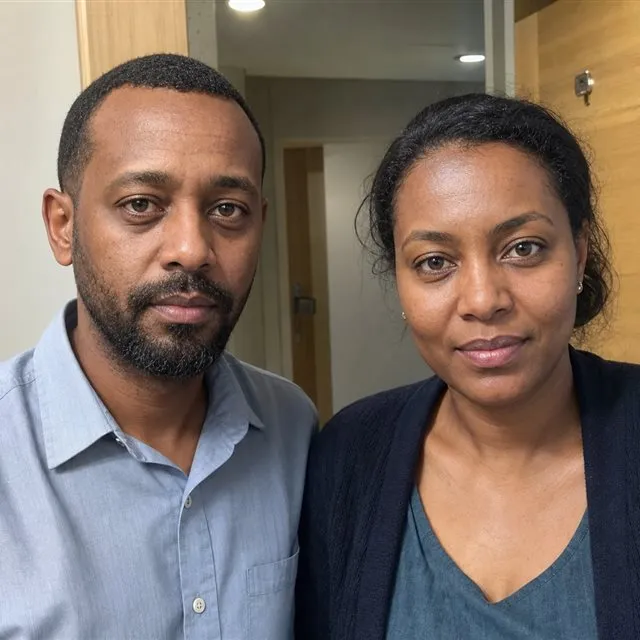
Aboul & Hossina
One household record. A second eviction notice, $3,400 in arrears, and a benefits workload split across two adults' schedules and languages.
Goal: Close the rent gap with a plan that sees the household, not half of it
Method & sample note
A phone diary reaches only people who opt in twice: once to the study, once through a working smartphone. This household is reachable because the platform takes voice-first Amharic and the stipend covers the data; a family with no smartphone, no minutes, or no safe moment to record would never appear here. Nothing below is a rate — it is what twelve self-selected records chose to show.
Laptop and phone showing a realistic mixed-media mobile diary dashboard with a persona video entry, documentary photos, text, and one voice note.
A mixed-media diary brings together participant video, photos, text entries, and voice notes for pattern review.
Themes
Five themes recurred across P07's 61 entries. The chart shows how often each appeared; the sections below tell each one through the household's own entries, with the team's reading kept to a closing sentence. An entry can support more than one theme.
Five themes from 61 household entries, led by benefits work squeezed into breaks and late nights.
Benefits work in the seams of the workday
14- 12:10 pm eligibility call ends unanswered when the break ends
- Letter photographed at the bus stop to reread on the ride
- Forms filled after 11 pm
One case, two half-records
11- Counter file lists only Hossina
- Worker asks where the husband is
- Same documents carried to a sixth door
Translation is a second shift
9- 11:40 pm letter session at the kitchen table
- App translates words but not amounts
- English sentence rehearsed before the counter
The arrears math lives on an envelope
7- 3,400 owed minus 2,100 assistance, written again
- The 1,300 gap never said back by any desk
The relay the system cannot see
8- Hossina holds the daytime, Aboul the English
- 9:20 pm voice-note replay and handoff
- Joint entries assemble one case nightly
Theme 1 — Benefits work happens in the seams of the workday
Phone photo of a breakroom counter with an active speakerphone hold beside an untouched lunch and note paper.
Lunch is 30 minutes. The music has had 19 of them. I eat standing so I can write if a person comes. 12:29 pm. — Aboul
Fourteen entries, the largest cluster in the record, document case-related tasks during Aboul's 30-minute lunch break and after 11 pm. Calls happen from the warehouse breakroom, letters get photographed at the bus stop to be reread on the ride, and forms get filled at the kitchen table long after the offices close.
"12:10 I call the eligibility line. Break ends 12:40. Still the music. Eating standing up so a hand is free to write if a person comes. 12:29 — no person. Hanging up, dock is calling us back."
— Aboul, diary entry, Day 8, 12:29 pm
The hold queue does not know it is spending someone's lunch break. That day it took 19 of his 30 minutes and gave nothing back — and the next call has to come out of the same window tomorrow.
Theme 2 — One case, two half-records
Phone photo of a digital queue status screen showing a queue number and estimated wait in a modern benefits waiting area.
2:04 pm. My phone shows my queue number and estimated wait. I practice my English sentence while the board changes. Voice caption translated from Amharic. - Hossina
The household divides the work the only way their schedules allow: "Hossina can go at 2. Aboul has the English and is at work." So Hossina sits at the counters, and eleven entries show what follows: each program meets one adult and files that adult as the whole case.
"The worker asks where my husband is. At work, like every day. The file shows only my name, so today the household is only me. I record what she said so it is not lost on the bus."
— Hossina, voice note, Day 8, 5:50 pm, translated from Amharic
Every counter's record is internally correct — and jointly wrong. Nobody's file holds the whole household, so the couple reassembles the case themselves each night. As they put it: "We need someone to see the household, not half of it."
Theme 3 — Translation is a second, unpaid shift
Phone photo of a denial letter, a phone, and an envelope of handwritten math on a kitchen table late at night, all text unreadable.
11:40 pm. Third time through the letter tonight. The app translates the words but not the amounts, so we do the numbers on the envelope. — Aboul
Nine entries follow the same after-hours routine: an English-only letter arrives, and the household converts it into night work — photograph it, run it through a translation app, redo the math by hand, decide what it means. The app translates the text, but the household still has to interpret the decision and recalculate the amounts.
"We were denied based on our old income, but we're earning less now."
— Aboul, text entry beside a photo of the denial letter, Day 3, 11:52 pm
The denial is based on the prior year's income, while the household's current circumstances have changed. The explanation is not available in language they can readily understand.
Theme 4 — The arrears math lives on an envelope
Seven entries show the household's arithmetic running ahead of the system's. They know the number that matters; no office has said it back to them yet.
"Rent owed 3,400. Assistance letter covers 2,100. Gap 1,300. I write it on the envelope again. No desk has said 1,300 back to us yet."
— Aboul, diary entry, Day 5, 11:58 pm
The entries document the household's rapid action, divided responsibilities, accurate calculations, and persistence. Even with that effort, a $1,300 gap remains unresolved.
Theme 5 — The relay the system cannot see
Eight entries document a deliberate relay: Hossina holds the daytime, Aboul holds the English, and the baton passes at the kitchen table after 9 pm, when the day's voice notes get replayed against the letters.
"I hold the day, he holds the English. At night we put the two halves on the table and make one case out of them."
— Hossina, voice note, Day 11, 9:24 pm, translated from Amharic
No program record shows how the household divides this work, even though that coordination keeps the case moving. The recommendations later in this report identify ways to reduce that workload.
Between-visit timeline
One representative weekday from the household record — Day 8, a Tuesday.
Day 8 flow from a 6:05 am planning note through a break-time call lost to a 19-minute hold and a 2 pm appointment with a late interpreter, to an 11:40 pm letter-translation session.
| Time | Location | Actor | Event | Emotion | Wait (min) | Friction |
|---|---|---|---|---|---|---|
| 6:05 am | Kitchen | Hossina | Voice note listing the day: housing appointment at 2, pharmacy, school form | Steady, listing | 0 | Planning happens before any office opens |
| 7:38 am | Bus stop | Aboul | Photographs the denial letter to reread on the ride to work | Rereading, stuck | 0 | Letter is English-only |
| 12:10 pm | Warehouse breakroom | Aboul | Calls the eligibility line on his 30-minute break; hangs up unanswered at 12:29 | Watching the clock | 19 | Queue outlasts the break window |
| 1:20 pm | Bus | Hossina | Rides to the housing program with the folder of forms | Braced | 0 | Third trip with the same documents |
| 2:00 pm | Housing program counter | Hossina | Appointment begins; phone interpreter connects at 2:25 | Waiting in two languages | 25 | Interpreter connected only after she asked |
| 3:10 pm | Housing program counter | Hossina | Told the file lists only her name | Split | 0 | Record holds half the household |
| 5:50 pm | Bus home | Hossina | Records a voice note of everything the worker said before it fades | Holding on | 0 | The answer travels home in memory |
| 9:20 pm | Kitchen | Both adults | Aboul home from shift; they replay the voice note against the letter | Tired, methodical | 0 | The household is its own case conference |
| 11:40 pm | Kitchen table | Both adults | Line-by-line letter translation; arrears math redone on the envelope | Exact, running on empty | 0 | Translation is unpaid night work |
Then the record goes quiet. Days 9 and 10 pass with no entries — the only zero-entry days in P07's otherwise nightly documentation. On the morning of Day 11 there is one four-second voice note.
Hossina's four-second morning voice note after two silent nights: we were not home last night.
We were not home last night.
First entry after two silent nights; four seconds; no probe sent
Analyst flag. The gap is unresolved and stays that way. The diary shows the household's nightly rhythm broke and then resumed; it does not show why. The team chose not to probe a silence; no interpretation is offered.
Highlight-reel shot list
Stills pulled for the readout deck; all synthetic illustrations.
- Day 3, 11:52 pm — the denial letter on the kitchen table, phone propped against the sugar jar, translation app open; text unreadable.
- Day 5 — an envelope margin filling with ballpoint subtraction, numbers out of focus.
- Day 8, 12:14 pm - breakroom counter; active speakerphone hold beside an unopened lunch container and note paper.
- Day 8, 2:04 pm - phone queue status showing queue number and estimated wait in a waiting room, queue area blurred behind it.
- Day 8, 9:20 pm — two phones side by side on the table, one mid-playback.
- Day 11, 6:12 am — dark frame, audio only, four seconds.
Findings & recommendations
Findings tie to diary evidence; interpretation stays in the theme notes above; owners are roles, not names.
Five diary findings, each tied to evidence, a recommendation, an owner role, and a metric.
| Finding | Recommendation | Owner | Evidence · metric |
|---|---|---|---|
| Case tasks land in the only unclaimed minutes of the workday | Offer scheduled callbacks and early-evening phone windows | Benefits call-center operations lead | 14 entries; Day 8: 12:10 pm call unanswered when the 30-minute break ends Share of calls resolved by callback |
| Programs hold two half-records of one household | Pilot a client-carried household intake summary; pair with a consent review before any shared record | Intake redesign team | 11 entries; Day 8, 3:10 pm: file lists only Hossina Retellings per household, baseline 8 |
| English-only letters convert to household night work | Issue eligibility letters in the household's stated language with plain-language amounts | Program communications manager | 9 entries; kitchen-table photos of 11:40 pm sessions Letters sent in preferred language |
| In the counter visits P07 logged, interpretation began only after a request | Log interpretation offers at check-in so the offer rate becomes measurable | Lobby operations lead | 4 logged visits; Day 8: interpreter at minute 25 Offers logged per shift |
| The household's arrears math runs ahead of the eligibility file | Accept current-month income documentation at review for active eviction cases | Eligibility policy lead | 7 entries; envelope ledger photo; prior-income denial cited in 4 Denials revisited on current-income evidence |
Limitations & quality self-check
- Small n, self-selected. Twelve records, one featured household: depth, not measurement, never a rate.
- Performed for the camera. A diary is self-curated; the tidy envelope math and steady 6:05 am lists may be partly composed for the researcher's eyes.
- Translation layer. Hossina's Amharic reaches analysts through platform translation, with back-translation spot-checks on 10 notes; register and nuance can flatten in transit.
- The silent nights. Days 9–10 produced no entries and one terse morning note. What those nights held is an explicit unknown of this record: the method captures only what participants choose to show.
- Unknowns preserved, unresolved (verbatim from the persona dossier):
- Which denials are local practice versus state or federal rule
- How often language access is offered before a client asks
- Whether household-level records can be used without erasing individual consent
- Self-check. One household, one record throughout; both adults' voices present; finding, interpretation, and recommendation kept on separate labeled lines; geotagging off; no entry either adult flagged as private was used.
28 days of proving eligibility: Janice's post-HR1 diary
Study snapshot
A targeted 28-day mobile diary followed 12 adults identified as likely affected by a new SNAP or Medicaid requirement during January 4–31, 2027. Recruitment began through consented outreach in September 2026. Janice's record is the featured case because her SNAP proof, Medicaid renewal, behavioral-health care, CPS service plan, and safe-house mail all interact.
Five synthetic study metrics: twelve affected participants, 274 diary entries, ten active for at least twenty days, nineteen proof submissions, and five confirmed acceptances.
Persona tile for Janice Brown post-HR1, the featured record in a synthetic twelve-person affected-cohort diary.
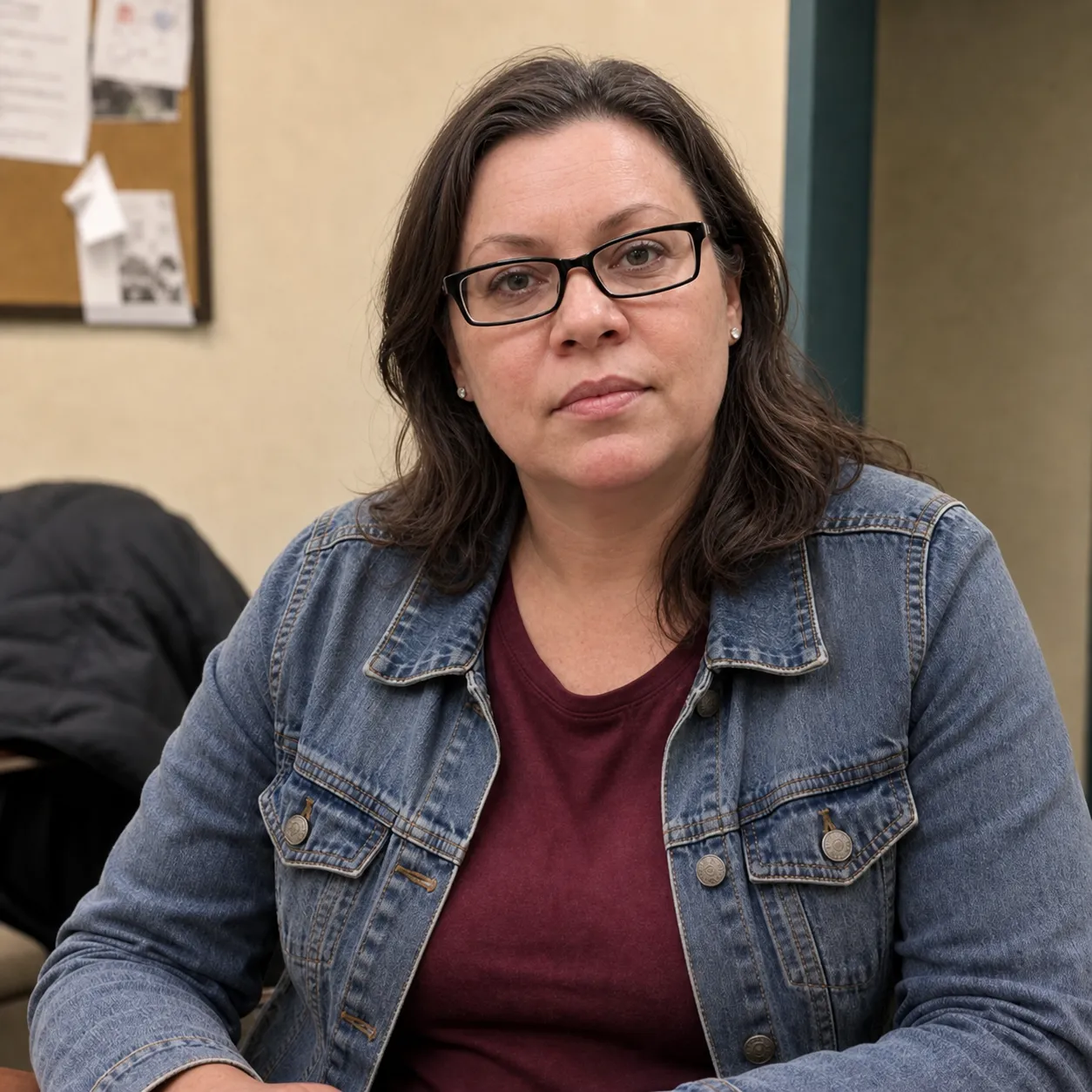
Janice Brown (post-HR1)
A 38-year-old safe-house resident navigating SNAP proof and a Medicaid Expansion renewal while behavioral-health care and reunification remain active goals.
Goal: Keep food and treatment stable while proving what applies—and reach real help if a benefit ends
The shared timeline for this package begins when Janice's SNAP notice reaches the safe house on September 11, 2026 and a Medicaid notice follows September 15. The diary covers the first affected 2027 renewal period and observes what she has to do while authorized agencies determine eligibility.
Method & sample note
Participants chose text, voice, photo, or assisted telephone entry and could skip any prompt. Devices and data were offered. Location metadata was disabled; notices and medical documents were never photographed with readable text; no children, safe-house identifiers, case numbers, or third-party faces were accepted. Research consent was separate from any consent to use information for service coordination.
The sample intentionally over-represents people with a known upcoming requirement. It excludes affected people who could not be identified, could not be contacted safely, declined, or could not use any offered diary mode. Diary silence means no evidence was submitted. It does not mean the participant understood the notice, kept a benefit, or failed to act.
Laptop and phone with a synthetic 28-day mobile diary dashboard and Janice shown as the selected composite participant.
Analyst view of the 28-day affected-cohort diary, with Janice's consented record selected
Themes
Five themes recurred in Janice's 31 submitted entries. The labels below are analyst coding. The underlying diary evidence, silence, and interpretation are kept distinct.
Five synthetic Janice diary themes: notices before understanding, proof dependencies, submission versus acceptance, daily effects of instability, and multiple steps from referral to help.
A notice starts work before it creates understanding
8- Two envelopes arrived four days apart
- Janice reread the household language in three entries
- A benefits call clarified SNAP but not the Medicaid exemption
Proof requires other people to act
9- Provider letter requested January 12
- Release question delayed the first draft
- Safe-house and clinic records followed different naming conventions
Submitted is not accepted
7- Portal image failed January 15
- Assisted submission completed January 16
- SNAP proof showed received January 18 but did not match before closure
Benefit instability changes daily choices
5- Meals simplified before the SNAP decision
- February behavioral-health visit rescheduled during coverage uncertainty
- Transportation money held for in-person follow-up
A referral becomes help only after several steps
6- Food resource offered January 22
- Contact made January 23
- Intake and groceries received January 24
Diary evidence: safe-house mail and two notices
Staged safe-house table with two generic envelopes, an unreadable notice, a mail log, and a handwritten deadline card.
Two unreadable program envelopes beside a safe-house mail log and Janice's handwritten deadline card
“This one says work. This one says renew. I do not know if the same paper answers both.”
P03 voice entry, January 8
Janice submitted the two envelope fronts with all identifying details covered and a voice note after an assistance call.
there is no entry showing what she understood during the first four days of the diary.
separate program notices manufactured one household problem without a shared explanation; notice sufficiency falls outside the diary evidence.
Diary evidence: provider documentation and upload
Staged clinic desk with an unreadable provider letter, consent checklist, phone, and generic upload panel.
A clinic desk during a consented provider-document workflow: blank letter, release checklist, and generic upload confirmation
Janice asked for possible medically-frail documentation on January 12. The provider drafted it January 14, the first portal upload failed January 15, and Customer Relations assisted with a new submission January 16. The upload receipt established transmission, not whether Medicaid considered the evidence sufficient. In January 2027 a signed statement was still enough for medical frailty, and the state had to check its own claims and encounter data before asking her for anything. Her diary records four days of work to produce a document the process may not have needed.
Janice says she already told somebody this and now the clinic must document it in the right way.
I already told somebody this. Now the clinic has to write it in the right way too.
Voice entry after requesting provider documentation
the record shows the request, draft, failed upload, assisted submission, and later acceptance status.
the diary contains no clinical details and cannot establish that Janice meets an exemption.
provider documentation is a service workflow with its own consent, timing, and ownership—not a form Janice can simply produce alone.
Between-visit timeline
The timeline below is the Janice continuity record used in all four HR1 mock reports.
Synthetic timeline from September 2026 notices through January and February 2027 proof submissions, short benefit lapses, restorations, and completed food and medical-navigation connections.
| Time | Actor | Event | Note |
|---|---|---|---|
| Sep 11–15, 2026 | Notice received | Two envelopes reach safe house on different days | Received; combined meaning not yet understood |
| Jan 8, 2027 | Affected status / exemption identified | Assistance call separates SNAP applicability from possible Medicaid exemptions | SNAP requirement treated as applicable; Medicaid exemption unresolved |
| Jan 12–16 | Proof available and submitted | Provider documentation requested; failed portal attempt; assisted resubmission | Received in system, sufficiency pending |
| Jan 18–22 | Proof match and SNAP outcome | Receipt visible; match not completed before action | SNAP lapse January 22 |
| Jan 22–24 | Food alternative | Offered, contacted, intake completed, groceries received | Service received January 24 |
| Jan 28–Feb 8 | Medicaid submission and outcome | Renewal packet submitted; exemption evidence accepted after coverage uncertainty | February 1–7 lapse; restored February 8 |
| Feb 1–3 | Medical navigation | Offered February 1; contact and case opening February 2; appointment help February 3 | Navigation service received; treatment visit rescheduled |
| Feb 5 | SNAP restoration | Assisted review resolves unmatched proof | Restored February 5 |
Highlight-reel shot list
- September envelope pair: unreadable notices arrive on separate days; voiceover asks whether the same proof answers both.
- January 12 provider call: audio-only reconstruction of Janice asking what the letter must establish; no clinical content.
- January 15 upload loop: screen recording stops before credentials; generic error followed by the assisted submission receipt.
- January 22 pantry substitution: a food-planning note records what changed after the SNAP lapse; no home interior or children shown.
- January 24 connection: Janice records that groceries were received, distinguishing service from the earlier referral.
- February 3 care navigation: calendar entry shows a behavioral-health visit rescheduled, not abandoned, during coverage uncertainty.
Findings & recommendations
Four synthetic findings pair Janice's diary evidence with owned recommendations and metrics for screening, proof packets, pre-closure outreach, and closed-loop referrals.
| Finding | Recommendation | Owner | Evidence · metric |
|---|---|---|---|
| Two program notices created one unowned interpretation task | Use a reusable HR1 screen that separates program, requirement, exemption, evidence, owner, and deadline | Benefits policy and Customer Relations | Eight Janice entries across notice and applicability themes Affected records with each determination and owner documented |
| Proof depended on provider action and failed once in transit | Create a consented proof-packet workflow with provider request date, receipt, submission, match, and acceptance | Behavioral health and benefits operations | January 12–16 diary sequence Median days from evidence request to confirmed acceptance |
| Receipt did not prevent a SNAP lapse | Trigger pre-closure outreach when submitted proof remains unmatched | Benefits operations | January 18 receipt; January 22 closure; February 5 restoration Closures preceded by an unresolved-proof outreach attempt |
| The food connection succeeded only after four observable rungs | Track offered, contacted, enrolled, and received separately for every alternative | Referral network lead | Offered Jan 22; contacted Jan 23; intake and food received Jan 24 Share of offered alternatives reaching service received |
The diary supports immediate workflow tests, not a conclusion about policy impact across the caseload. Any pilot should compare diary evidence with the journey map, QSR findings, and staff friction logs before changing a process.
Limitations & quality self-check
- Targeted, self-selected sample. Twelve participants with safe contact and some form of device access cannot represent all affected clients. Counts describe this diary only.
- Reactivity and selective evidence. Participants chose what to record. Media may change behavior; crises and unsafe moments are systematically under-recorded.
- Silence stayed missing. Two participants had long gaps. Analysts did not code those gaps as compliance failure, benefit retention, or disengagement.
- No legal inference. The study observed navigation. It did not determine whether an exemption applied, whether a notice met legal requirements, or whether DCHS could change the ultimate eligibility decision.
- Causation not claimed. Janice's behavioral-health visit was rescheduled during coverage uncertainty; the diary does not prove the lapse caused a CPS or reunification outcome.
- Unknowns preserved, unresolved. “Whether state and local systems can match available proof before asking her to submit it again.” “Which alternative services remain usable after a benefit ends, and whether she actually receives them.” A real study must keep both questions open until record evidence and client confirmation converge.
- Quality checks. Multi-mode access offered; consent separated; safe-house and health data minimized; entries, silence, and interpretation distinguished; all fabricated figures marked.