 DCHS Insights CX Human-Centered Design @ DCHS PROTOTYPE no real data
 Shadowing
What it is
Two modes: a staff member from a different center goes through the process as a client would (a staff walk-through), or a trained observer follows a real, consenting client from the waiting room forward (shadowing), time-stamping every touchpoint. The fastest way to see your own system as a stranger sees it.
"What is the real, step-by-step experience — including the gaps between what we say we do and what actually happens?"
What it tells you and what it cannot
| Tells you | Cannot tell you |
|---|---|
| The actual sequence, waits, handoffs, and dead ends, minute by minute | Frequency — one journey is one journey |
| The say-do gap: official process vs observed reality | The client's inner life — a walk-through is simulated, and a shadow cannot read minds |
| Urgency — observation is famously persuasive to the people who go | Representativeness; and a walk-through cannot feel dependency or retaliation fear |
How it runs
| Who does the work | Participants | Elapsed time | Cost |
|---|---|---|---|
| One observer per journey (staff from another site, or a trained shadow) | A handful of journeys; 5–10 runs reveal recurring patterns | Days to two weeks; hours per journey | $ — mostly staff time |
Strengths, watch-outs and quality signals
staff observe the process directly, which may prompt faster action than documentation alone; catches what process docs hide; cheap and fast.
the Hawthorne effect — staff and clients behave differently when observed; single-observer subjectivity without a structured guide (e.g., TACIT: Touchpoint, Actor, Content, Interaction, Timing); sampling only the easy journey.
a time-stamped record of the real workflow with waits measured; surprises that contradict staff assumptions; observations specific enough to trigger fixes the same week.
Equity & consent
Shadowing a real client intrudes on a vulnerable moment: rigorous consent at the door, the right to stop at any time, and strict non-interference. Choose diverse journeys, not convenient ones. One caution from practice: observation can feel evaluative to the host program. Explain the design purpose in advance and involve staff in interpreting the findings.
When to choose it
to compare the documented process with what occurs during an actual visit and to identify specific delays, handoffs, and workarounds.
the UPMC patient- and family-centered shadowing method and its care experience flow map.
Shadowing report — 52 minutes at the benefits lobby: Marisol Reyes
Setup
Mode. A consented shadow of one client visit, garage to garage, written as a care experience flow map (real background: DiGioia et al. 2011). Shadowing records what happens to one person, when, and for how long — nothing else.
Who. I am a trained observer from a different DCHS center, unknown to this lobby's staff. I meet the client at the entrance, run a two-minute consent script (stop any time, no personal details kept), and stay one step behind her. Session: Tuesday, July 28, 2026, 12:46–1:38 pm.
Protocol. TACIT — Touchpoint, Actor, Content, Interaction, Timing logged at each step. Observation only: no intervening, no coaching, no questions during the visit. Objective events and my subjective reads kept in separate fields.
Hawthorne caveat, up front. She knew I was there; staff saw me writing. Assume both sides ran the visit somewhat more carefully than unobserved; the consent script itself added about two minutes. One session; the standard design is 5–10 runs (see limitations).
Persona tile for Marisol Reyes, composite client, one flagged document on an unpaid lunch.
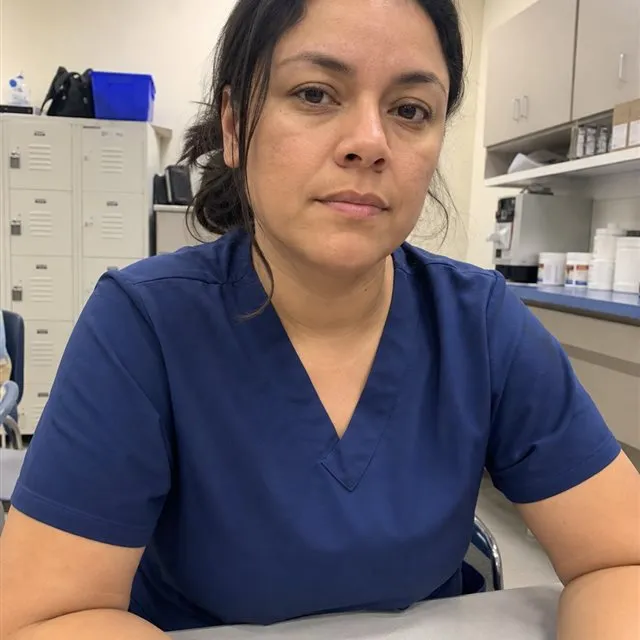
Marisol Reyes
Works full time. Came on an unpaid lunch hour to get one flagged document accepted.
Goal: The letter resolved and back to work by 1:40 pm
Care experience flow
event is what happens; emotion is my read from one seat away; stage maps to the six-stage journey model — stage 5 has no row because nothing occurred to record.
Time-stamped flow of the 52-minute visit from 12:46 pm arrival through an 18-minute wait to 1:38 pm exit.
| Stage | Time | Location | Actor | Event | Emotion | Wait (min) | Friction |
|---|---|---|---|---|---|---|---|
| 1 | 12:46 pm | Garage-side entrance | Client + shadow | Arrives from the garage, ticket in hand; consents to the shadow | Brisk, composed | Garage clock running from minute one | |
| 1 | 12:48 pm | Lobby entrance | Client + reception staff | Asks where to take a SNAP letter; staff points her to check-in | Hurried | Wayfinding depends on a person | |
| 2 | 12:50 pm | Check-in window | Client + greeter | States her errand - a second identical letter after two uploads; told it should not be long, no estimate; says she has until 1:40 | First edge in voice | 18 | No estimate against a hard deadline |
| 2 | 12:51 pm | Waiting area | Client | Sits with a tabbed folder; re-sorts it twice, checks the phone clock three times | Contained, time-keeping | Qminder board shows position, not minutes | |
| 2 | 1:08 pm | Counter 4 | Client + worker | Called at minute 18; retells the letter story once and hands over one pay stub | Efficient, rehearsed | ||
| 3 | 1:10 pm | Counter 4 | Worker | Asks which weeks the extra shifts covered and whether the employer matches - both about the mismatch - then types across two screens in silence; says she cannot see the portal uploads and will use the paper copy | One-sentence answers, then reading the partition | 12 | System time is silent time |
| 3 | 1:26 pm | Counter 4 | Client | Checks the phone clock twice inside one minute - minute 40 on site | Deadline pressure visible | ||
| 3 | 1:28 pm | Counter 4 | Worker | Typing ends. Six substantive questions this visit, all about the income mismatch; no other topic raised - non-event recorded at its timestamp | Neutral, procedural | The question set stops at the document | |
| 4 | 1:29 pm | Counter 4 | Worker + client | Pay stub accepted, benefit continues; confirmation printed; by 1:31 she is all set; no follow-up or next step mentioned | Relief, brief and real | Nothing scheduled afterward | |
| 6 | 1:33 pm | Lobby to exit | Client | Repacks the folder, keys out; at 1:38 taps the light-green face on the exit kiosk and pushes into the garage - 52 minutes on site | Reads as fine |
Reconciliation: on site 12:46–1:38 pm (52 minutes); wait 12:50–1:08 (18 minutes); out by 1:40 pm — inside her stated deadline.
Observed pain points
Client quote saying she is not a case and just needs this fixed so she can get back to work.
I'm not a case. I just need this fixed so I can get back to work.
1. Reception staff are the wayfinding fallback. Finding: She asks where to go; staff point her to check-in. During her wait, 5 of the next 7 arrivals ask a person before using the digital wayfinding or check-in flow. Interpretation: The building has formal wayfinding, but the first successful interaction is often still a person; how it lands depends on who is on shift.
2. The wait is unpriced. Finding: Check-in offers no estimate. Overheard at the window: "I've got until 1:40. Then I have to be back." The call comes 18 minutes later. Interpretation: A fixed unpaid budget spent against an unknown price; the later clock-checking is that cost made visible.
Phone photo from a benefits-lobby seat showing chairs, anonymous waiting visitors, a blurred Qminder queue screen, and a blurred wall poster.
Her view for 18 minutes - a Qminder queue board showing position, not minutes, and a poster about help with more than one thing
3. Paper succeeds where the portal failed twice. Finding: She says she uploaded this stub twice and got the same letter twice; the worker cannot see the uploads and takes the paper copy, accepted 21 minutes later. Interpretation: The lobby is the portal's error handler. One visit cannot say how often — only that today it did.
4. System time is silent time. Finding: For a dozen minutes mid-visit the worker types across two screens without narrating; at 1:26 the client checks the clock twice in one minute. Interpretation: Processing may be necessary; unexplained time reads as stalled time from her chair.
Say-do gaps
The say. The waiting-area poster offers help with more than one thing (photo above); both staff openings are formally open — what brings you in, an offer to help. On paper, the door is wide.
The do. Every substantive question narrows to the income mismatch: six across 52 minutes. At 1:28 pm the typing ends and the last natural opening for any other question passes unused — logged at its timestamp in the flow. At 1:31 the visit closes with nothing scheduled; stage 5 never occurs, and that absence is itself an observation.
The smaller gap. "Should not be long" priced the wait at nearly nothing; it ran 18 minutes against a stated 1:40 deadline.
The boundary. I can count questions asked and note questions not asked. I cannot know what an unasked question would have surfaced, and this report does not guess.
What it felt like
Observer note, 1:45 pm, garage stairwell: 12:51 pm. I sit one seat over. Her folder is tabbed; the garage stub marks the pay-stub page. She does not fidget; she keeps time. At the counter her answers are one sentence long, and the keyboard is the loudest thing between them. At 1:26 she checks the phone, sets it down, checks it again. At 1:29 her shoulders come down an inch. At 1:38 she taps the light-green face without breaking stride and the garage door swings shut, two minutes ahead of her deadline. Quick, polite, complete. Everything I could see got handled.
Findings & recommendations
Findings restate the record; recommendations are the observer's, for owners to accept or amend.
Findings table linking four shadow observations to recommendations, owners, and metrics.
| Finding | Recommendation | Owner | Evidence · metric |
|---|---|---|---|
| Reception staff are the de facto wayfinding fallback inside the door | Pilot clearer decision signage between reception, digital wayfinding, and Qminder check-in | Lobby operations lead | 12:48 pm; 5 of 7 arrivals Arrivals reaching check-in unaided, spot-counted |
| Waits are unpriced; no estimate offered against a fixed unpaid lunch hour | Show a live wait estimate at Qminder check-in and on the queue board | Benefits lobby supervisor | 12:50 pm; 18-minute wait Check-ins shown an estimate; median estimate error |
| The counter absorbs portal failure; two uploads produced the same letter and a 52-minute visit | Give counters a view of upload attempts; log duplicate-letter visits so the failure rate becomes measurable | Portal product owner | 1:08-1:29 pm; paper accepted Duplicate-letter visits logged per week |
| The question set stops at the presenting document; the visit closes with nothing else asked or scheduled | Co-design one standing closing question for document-resolution visits, with a referral path and opt-out | Economic supports practice lead | 1:28 pm non-event; six questions; no stage 5 Closing question asked, tracked in QA shadow samples |
Limitations & quality self-check
- One run, one observer. One journey, one lobby, one lunchtime hour; nothing generalizes. The working design is 5–10 runs across varied journeys, days, and staff before patterns are read as recurring; this is one data point and a demonstration of the instrument.
- Hawthorne effect. Consented shadowing changes the visit on both sides of the counter; direction and size of the distortion are unknown.
- The observation boundary. This record holds events, waits, and non-events — not needs, motives, or history. One need was surfaced and resolved: the document. Whether it was the only need in the room is what shadowing cannot determine; the persona dossier behind this mock says it was not — needs surfaced 1 of 4 — and nothing observable would have told you.
- Unresolved by design, verbatim from the persona record — the shadow neither asked nor could answer:
- Whether she would accept a referral from someone she just met
- Whether Ethan would go
- Whether Rosa is someone DCHS has any way of reaching
- How many people with similar circumstances are seen every week and never asked
- Whether the portal failure is common or rare
- Self-check. Timestamps reconcile: 18-minute wait, 52 minutes on site, out by 1:40 pm. Objective and subjective in separate fields; Finding, Interpretation, Recommendation separated; all observations synthetic per the banner.