 DCHS Insights CX Human-Centered Design @ DCHS PROTOTYPE no real data
 Rapid high-volume feedback (kiosks)
What it is
A one- or two-tap rating at the point of exit — smiley terminals or tablets, one fixed question, four buttons, no neutral midpoint. Volume and trend detection, not explanation.
"How is satisfaction trending — by location, day, and hour?"
What it tells you and what it cannot
| Tells you | Cannot tell you |
|---|---|
| Huge response volume, continuously, at trivial per-response cost | Reasons for a rating; a decline indicates where to investigate but does not explain the cause |
| When and where satisfaction dips (time/location tagging) | Who responded, or anything about complex needs |
| Whether a change moved the trend | Nuanced feedback; a single response provides only a rating |
How it runs
| Who does the work | Participants | Elapsed time | Cost |
|---|---|---|---|
| Almost none day-to-day; one owner for the dashboard and alerts | Self-forming, hundreds+ per week | Days to deploy; runs continuously | $–$$ — hardware/subscription |
Strengths, watch-outs and quality signals
frictionless; genuinely high volume; pinpoints hotspots by hour and site; anonymity can raise candor.
response bias — the very happy and very angry over-tap, and children mash buttons; no "why" attached to any number; placement bias (a kiosk by the happy exit measures the happy exit).
stable high response counts; dips that correlate with real events; and every sustained decline followed by a method that can investigate the cause.
Equity & consent
Minimal consent burden (anonymous single tap), but physical and language accessibility decide who is counted: mounting height and reach for wheelchair users, screen contrast for low vision, and the prompt's language. Some clients fear a negative tap could be seen and held against them — placement away from staff sightlines matters.
When to choose it
for continuous monitoring that identifies times and locations for further investigation.
HappyOrNot's four-smiley convention — deployed across 100+ countries with cumulative responses in the billions — deliberately drops the neutral midpoint to force a lean.
Exit-kiosk feedback — benefits lobby weekly summary
What this can and cannot tell us
- Can tell us: volume, direction, and where/when — one terminal's taps, trended by day and hour.
- Cannot tell us: why any number moved, who tapped, or anything nuanced.
- Everything below is a flag; every "why" routes to "Trigger deeper inquiry."
The question & scale
One temporary HappyOrNot-style terminal at the benefits-lobby exit, separate from the building wayfinding kiosk, Monday–Friday, August 3–7, 2026, asking one question:
"How was your visit today?"
Four smiley buttons — very happy (dark green), happy (light green), unhappy (light red), very unhappy (dark red) — with no neutral midpoint; the even scale forces a lean (real background: HappyOrNot's four-button convention; one billion cumulative presses across 120 countries). A negative tap offers one optional follow-up layer: five reason categories, no open text. Taps are anonymous — no identity, no segments.
Headline metrics
Week of August 3–7: 340 taps, 76% positive, down 3 points on the prior week.
Headline tiles: 340 taps, 76 percent positive, down three points, 8 percent very unhappy.
Weekly trend
Positive share fell every day, 82% to 69% — a 13-point slide. The kiosk does not tell us why.
Positive share falls from 82 percent Monday to 69 percent Friday.
Positive share by day
57 of 81 negative taps chose a reason; "Wait time" leads. Categories, not accounts.
Ranked bars of follow-up reasons: wait time leads with 24 taps.
Hotspots
The kiosk identifies when and where ratings change, but it cannot explain the cause. All cells:
- Weekday 12:30–1:30 pm — 54% positive (33 of 61 taps) against the 76% weekly average: the lunch hour. The kiosk can see the dip; it cannot see a single reason for it.
- Friday — 69% positive, the lowest day of a five-day slide.
- Before 10:00 am — 84% positive, the highest window — contrast, not explanation.
What the kiosk did not see
One tap, reconstructed as a composite vignette. Marisol Reyes came in on an unpaid lunch break to fix a SNAP renewal flagged after the portal rejected the same document twice. She passed through one door, waited 18 minutes, and submitted one pay stub. The document was accepted and her benefit continued. She spent 52 minutes on site and left by 1:40 pm; at 1:38 pm she tapped light-green.
Persona tile for Marisol Reyes, composite client: one document fixed, three needs unseen.
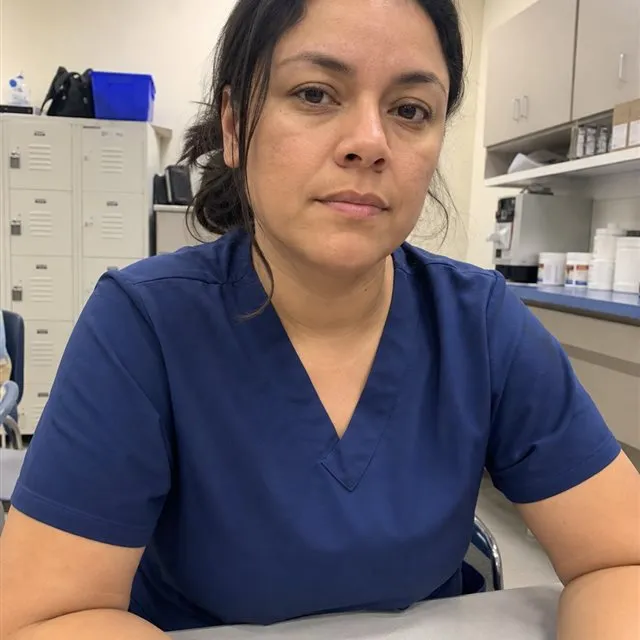
Marisol Reyes
Works full time. Came to fix one document. Left with needs we would not have seen.
Goal: To not have to think about any of this
Her light-green rating accurately reflected that the presenting task was resolved, but the kiosk recorded nothing else about the visit. Three other needs remained unidentified: a withdrawn 13-year-old and waitlists, an evening childcare gap, and about $380 of electric arrears. Nobody asked beyond the document mismatch, and an open lobby was not a place where she would volunteer more. She submitted the rating during the week's lowest-scoring time period.
Client quote: The document got fixed. Nobody asked about anything else.
The document got fixed. Nobody asked about anything else.
Tapped light-green at 1:38 pm, out by 1:40 pm
Left open, in the kiosk's own terms: of the week's 259 green taps, how many walked out the way she did — presenting task fixed, nothing further asked? The kiosk cannot count that; this report does not guess.
Response bias & equity caveats
- Self-selection. About 610 lobby check-ins vs 340 taps; roughly half of exits, and we do not know how the silent half differs.
- Button-mashing. Repeat-press bursts (a bored child) inflate counts; left in the totals, not guessed out.
- Reach. Adult standing height; the concept should be implemented in English, Spanish, Amharic, Arabic, and Dari/Farsi. Shorter, seated, low-vision, and low-literacy visitors may still be undercounted.
- Perceived exposure. Visible from the counter; anonymous in fact, but a visitor mid-case cannot know that, and a red tap can feel risky.
Trigger deeper inquiry
The kiosk points; these methods ask.
Findings table routing each kiosk flag to exit intercepts or shadowing with an owner and a follow-up metric.
| Finding | Recommendation | Owner | Evidence · metric |
|---|---|---|---|
| Positive share falls to 54% in the weekday 12:30-1:30 pm window | Exit intercepts across two lunch hours | CX research lead | 33 of 61 taps Completed intercepts per lunch hour |
| Positive share slid 13 points from Monday to Friday | Shadow two Friday afternoon sessions, door to exit | Lobby operations lead | 82% Mon to 69% Fri Timed waits and handoffs per session |
| 'Could not finish my task today' ranks second among reasons | Add a fixed intercept question on what preceded the visit | Digital services manager | 13 of 57 reason taps Share reporting a failed portal attempt first |
| A light-green tap can exit with needs never surfaced | Counter shadowing to observe what is asked beyond the presenting task | Benefits program manager | Composite vignette Questions beyond the presenting task per visit |
Limitations & quality self-check
- Trends, not causes. What changed, where, when — never why; no causal claims.
- Anonymous, so no segments. No demographics, no repeat-visitor linkage; dip cells cannot be decomposed.
- Small cells. The lunch-hour cell holds 61 taps; a handful of presses moves it several points.
- Synthetic throughout. All counts, percentages, and timestamps are fabricated; only the four-button convention and vendor volumes are real background, cited above.
- Unknowns preserved, verbatim and unresolved: "Whether she would accept a referral from someone she just met"; "Whether Ethan would go"; "Whether Rosa is someone DCHS has any way of reaching"; "How many people with similar circumstances are seen every week and never asked"; "Whether the portal failure is common or rare". The kiosk answers none of them; neither does this report.
- Continuity check. The vignette matches the persona record: 1 door, 18-minute wait, 52 minutes on site, out by 1:40 pm, needs surfaced 1 of 4, light-green tap at 1:38 pm.